
Each Fluent15 story page is designed to help you learn a language through reading, listening, vocabulary, grammar, and practice. You can study the story first, then explore the language details and complete the exercises.
The page is divided into several sections.
- Story Title and Navigation
- The audio bar
- Story section
- Study section
- Excercise section
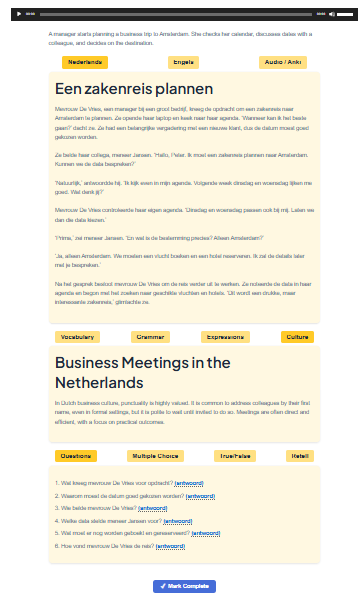
Story Section
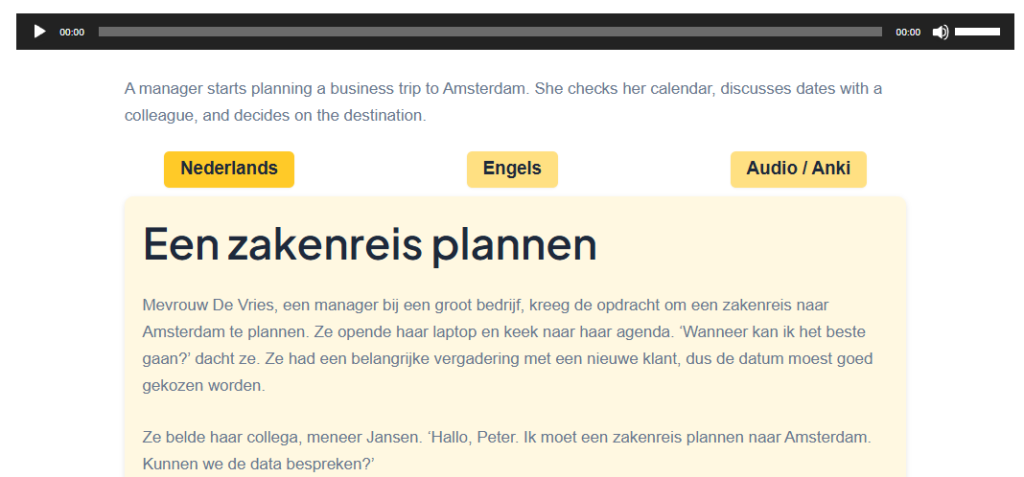
The story section contains different language views.
Original Language
This is the story in the language you are learning.
Use this section to:
- practise reading
- recognise vocabulary in context
- understand sentence structures
Try reading the story before looking at the translation.
Translation
The translation helps you check your understanding.
Use it when:
- a sentence is unclear
- you want to confirm the meaning
- you want to compare sentence structures between languages
Avoid reading the translation first every time. Reading first in the target language helps you develop your comprehension skills.
Audio and Anki Section
When available, you can listen to the story being read aloud.
Use the audio to practise:
- pronunciation
- listening comprehension
- natural rhythm and intonation
Recommended practice:
- Listen once without reading.
- Listen while following the text.
- Read the story aloud yourself.
Anki
Anki flashcards allow you to review vocabulary from the story using spaced repetition.
Use Anki regularly to remember new words over a longer period.
Vocabulary Section
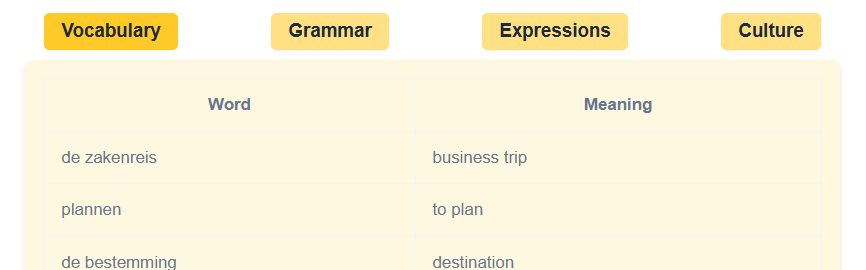
The Vocabulary section highlights important words from the story.
Each vocabulary item shows:
- the word in the target language
- its meaning in English
Example:
| Word | Meaning |
|---|---|
| de zakenreis | business trip |
| plannen | to plan |
| de bestemming | destination |
Use this section to:
- review new words
- check meanings
- prepare before reading again
Try to understand the words from the story context instead of memorising isolated lists.
Grammar Section
The Grammar section higlights important language patterns found in the story.
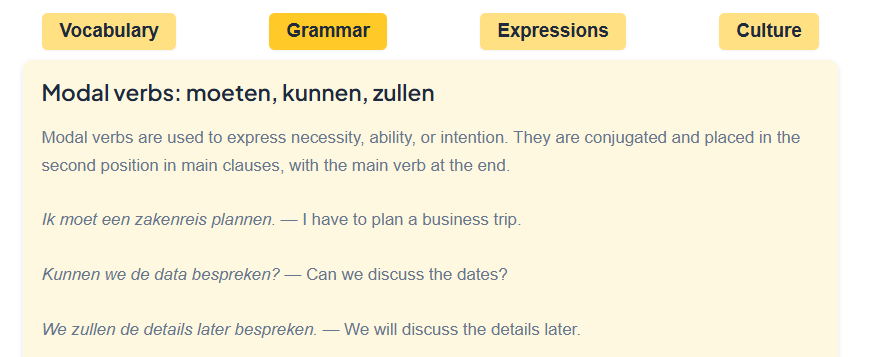
Each short explanation includes:
- the grammar rule
- examples from the story
- English explanations
Use this section to understand why sentences are constructed in a certain way. This is meant as a quick reference.
Example topics may include:
- verb patterns
- sentence structure
- modal verbs
- separable verbs
After reading the explanation, return to the story and find more examples.
Expressions Tab
The Expressions tab focuses on useful phrases and combinations of words.
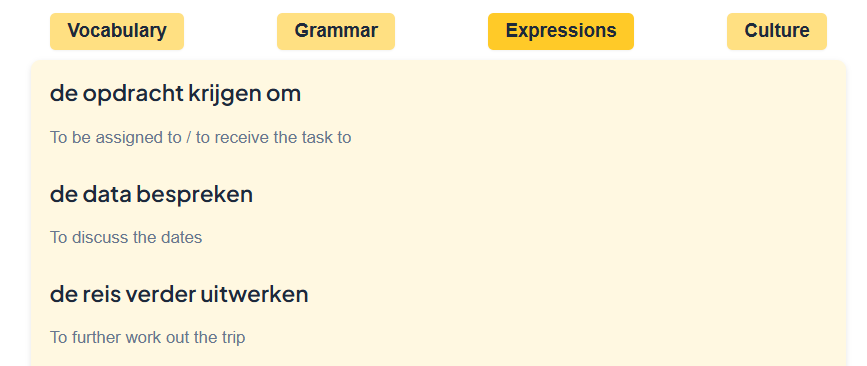
These are expressions that native speakers commonly use.
Learn expressions as complete phrases rather than individual words.
For example:
- a phrase used for making arrangements
- a phrase used for discussing plans
- a phrase used in professional situations
Culture Tab
The Culture section explains cultural information connected to the story topic.
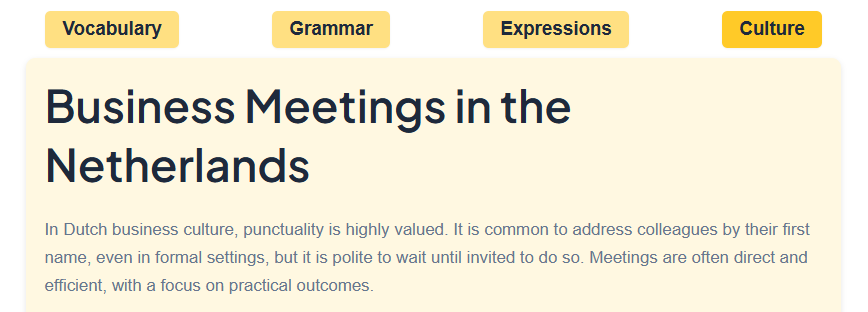
This helps you understand:
- how people communicate
- social habits
- professional or everyday customs
Language learning is not only about words and grammar; it is also about understanding the culture behind the language.
Exercise Section
At the end of the page, you will find exercises to check your understanding.
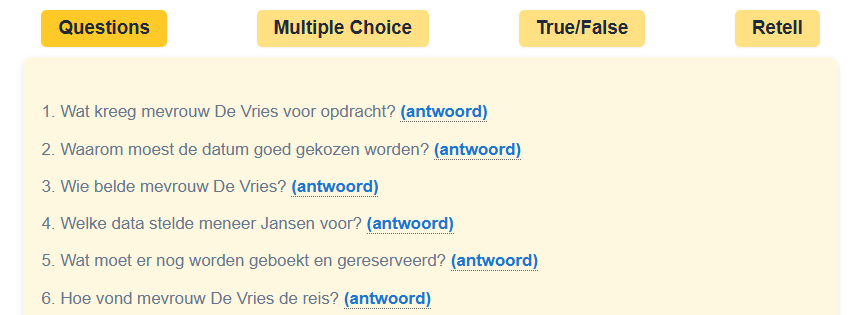
Questions
Answer questions about the story.
Purpose:
- check reading comprehension
- practise recalling information
Multiple Choice
Choose the correct answer.
Purpose:
- test your understanding of details
- review vocabulary in context
True / False
Decide whether statements match the story.
Purpose:
- practise careful reading
Retell
Use the hints to retell the story in your own words.
Purpose:
- practise speaking
- activate vocabulary
- build confidence
Story Hints
Some exercises include hints with keywords.
These help you remember the story without giving you the complete answer.
Use hints when:
- you cannot remember what happened
- you want to practise speaking
- you want to summarise the story
Try to create your own sentences using the keywords.
Recommended Study Method
For the best results, follow this order:
First time
- Read the story in the target language.
- Check the translation if needed.
- Listen to the audio.
- Review vocabulary.
Second time
- Read again without translation.
- Study the grammar and expressions. (if needed)
- Complete the exercises.
Later review
- Listen again.
- Retell the story.
- Review vocabulary with Anki.
By repeating the story in different ways, you learn naturally through exposure and practice.